


- Headlight Mounting Brackets
- metal cnc machining
- CNC Machining Service
- aluminium fabrication
- Precision Machining
- machine tool handle cover
- rivets
- titanium alloy fasteners
- coupling
- Humanoid robot accessories
- CNC bracket
- Metal bracket
- screw
- bracket assembly
- Automotive Bearings
- bicycle parts
- Robot parts
- titanium fasteners
- Stainless steel
- metric bolts and nuts
- titanium alloy
- Stainless steel ratche
- Precision Machining Parts
- CNC machined parts
- CNC Milling Parts
- Aluminum alloy parts
- Plastic injection parts
- Brass parts

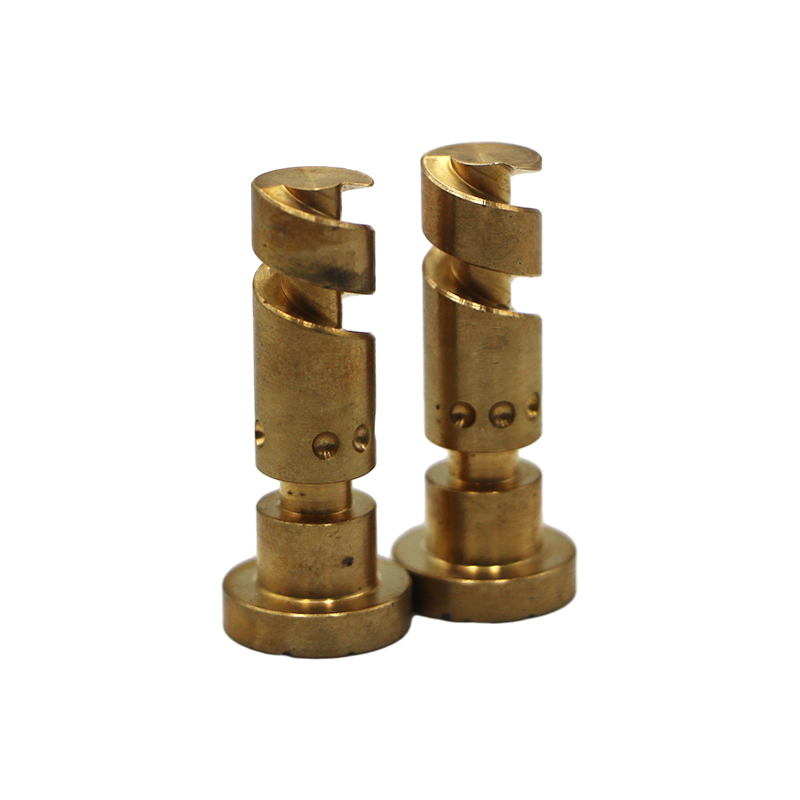
Trustworthy Brass fasteners H59 CNC custom-made connecting screws for mechanical equipment
Inquiry- Description
Trustworthy Brass fasteners H59 CNC custom-made connecting screws for mechanical equipment
In today’s machinery manufacturing, shipbuilding, precision instrumentation, and high-end decoration industries, brass fasteners, with their unique golden luster, excellent electrical and thermal conductivity, and superior corrosion resistance, have become the top choice for connecting critical components. However, traditional machining methods often face challenges such as insufficient precision, low efficiency, and poor consistency when manufacturing precision brass fasteners. The introduction of Computer Numerical Control (CNC) machining has completely changed this situation, bringing revolutionary improvements to the manufacturing of brass fasteners.
1. Achieving Micron-Level Geometric Accuracy for Perfect Assembly
1) The core function of brass fasteners lies in precise connection, which requires that key parameters such as threads reach extremely high precision standards. Traditional machining methods struggle to guarantee the consistency of each fastener in mass production, while CNC machining, through digital program control, can achieve machining accuracy of ±0.005 mm, ensuring that each thread profile and head structure perfectly matches the design requirements.
2) Multi-axis CNC machine tools can complete the entire machining process of complex fasteners in a single setup, from shank turning to head forming, from thread milling to slot cutting, with seamless integration throughout the process, eliminating the cumulative errors caused by multiple setups. This integrated machining method not only improves production efficiency but also fundamentally ensures the geometric integrity and assembly reliability of fasteners.

Trustworthy Brass fasteners H59 CNC custom-made connecting screws for mechanical equipment
2. Overcoming Material Characteristics Challenges and Optimizing Machining Surface Quality
1) Brass is relatively soft and has good ductility, which is both an advantage and a challenge. In traditional cutting processes, brass is prone to burrs and tool sticking, affecting surface quality and service life. CNC machining effectively addresses these challenges by precisely controlling cutting parameters—including spindle speed, feed rate, depth of cut, and coolant usage.
2) Advanced CNC systems allow for specialized tools and optimized cutting paths for brass machining strategies, ensuring efficient material removal while achieving a mirror-like machined surface. This high-quality surface treatment not only enhances the aesthetics of fasteners but also provides an ideal base for subsequent electroplating, passivation, or special coating treatments, ensuring that the final product possesses both superior visual appeal and durable functionality.
3. Achieving Integrated Complex Structures and Enhancing Functional Integration
1) Modern engineering applications place increasingly complex demands on fasteners, with individual fasteners often needing to integrate multiple functions. CNC machining can precisely translate complex design intentions into physical parts, achieving structural innovations that are difficult to achieve with traditional machining methods.
2) Whether it’s anti-loosening screws with special locking grooves, pipe fittings with integrated sealing rings, or high-end furniture hardware with unique decorative textures, CNC technology can complete manufacturing with extremely high precision and consistency. Multi-axis machining centers can directly mill three-dimensional curved surfaces, irregularly shaped holes, and fine textures onto brass blanks, perfectly blending functional requirements with aesthetic design. This integrated manufacturing method not only simplifies the assembly process but also improves the reliability and service life of the entire connection system.
4. Adapting to Flexible Production Needs and Supporting Rapid Innovation and Iteration
1) In today’s increasingly competitive global market, product iteration is accelerating, and the demand for small-batch, multi-variety production is growing. CNC machining eliminates the need for expensive mold investments; production lines can be quickly converted to produce brass fasteners of different specifications and designs simply by modifying the digital program.
5. Achieving Optimal Resource Utilization and Promoting Sustainable Development
1. As a relatively expensive metal material, the material utilization rate during the machining process of brass is crucial. CNC machining, through intelligent toolpath planning and nesting optimization, can minimize material waste and increase raw material utilization to over 90%.
2. Simultaneously, the brass chips generated during CNC machining have high purity and significant recycling value, allowing for near 100% reuse. This efficient material utilization not only reduces production costs but also aligns with the concept of sustainable development in modern manufacturing, reducing environmental impact.
The combination of CNC machining technology and brass materials represents a significant leap forward in the field of precision manufacturing. It not only improves the machining precision and production efficiency of brass fasteners, but more importantly, it empowers designers and engineers with greater creative freedom, allowing this traditional material to radiate new vitality in modern engineering applications. Every finely crafted brass fastener made with CNC technology, with its silent precision and enduring reliability, connects to the grand architecture of modern industrial civilization, witnessing the profound transformation of manufacturing technology from traditional processes to digital intelligence.
We are a manufacturer integrating industry and trade. We have more than 20 years of experience in production technology. We are located in Dongguan City, Guangdong Province, China. We have advanced high-end professional production and processing technology, and are committed to innovative R&D and production. After years of market tempering and exploration, it has high-quality technical management personnel, experienced designers, R&D personnel and a perfect company management system cnc precision.
5-axis CNC workshop
Our factory has a plant area of about 2,000 square meters and masters core processing technologies. It has high-end precision production equipment cnc precision: CNC lathes, 5-axis CNC, 4-axis CNC, stamping equipment, die-casting equipment, etc. 2.5-dimensional detection equipment 
cnc precision surface treatment
For surface treatment, our suppliers have been working with us for many years. They have rich experience and are familiar with all the quality requirements of each other. The quality is stable and more guaranteed. Such as: heat treatment, spray painting, powder coating, blackening, silver/gold plating, electrolytic polishing, nitriding, phosphating, nickel/zinc/chromium/TiCN plating, anodizing, polishing, passivation, sandblasting, galvanizing, heat treatment , hardening, laser marking, etc. according to customer requirements. Aluminum alloy surface oxidation
Product Packaging
Packaging Details
- Commercial packaging: 1pc/plastic bag + color box +carton + pallet;
- Industrial packaging: (1). plastic tube + carton + pallet; (2). plastic bag + kraft paper + carton + pallet;
- According to the requirement of customer.

FAQ
Q1: Where can I get product & price information?
A1: Send us an inquiry e-mail, we will contact you once we received your mail.
Q2: How long will I get the sample?
A2: Depends on your specific items, within 3-7 days generally.
Q3: What kinds of information do you need for a quote?
A3: Kindly please provide the product drawings in PDF, if provide in STEP or IGS will be better.
Q4: What are the payment terms?
A4: We accept 50% as a payment deposit, when the goods are prepared, we shoot photos or videos for your check, and then you can pay the balance. For small quantities, we accept Paypal, the commission will be added to the order. For big amounts, T/T is preferred.
Q5: How to deliver the goods?
A5: We deliver the products by courier company.
Q6: Are you a trading company or factory?
A6: We are factory direct with 17 experienced engineers and more than 50 employees as well approximate 3,000m2 workshop area.
Q7: What shall we do if we don’t have drawings?
A7: Please send your sample to our factory, then we can copy and provide you better solutions. If send us pictures or drafts with dimensions(Length, Height, Width), CAD or 3D file will be made for you.
Q8: Can we get some samples before mass production?
A8: Absolutely yes.
Q9: Will my drawings be safe after sending them to you?
Q10: Is it possible to know the operation status of my products without visiting your company?
A10: We will offer a detailed production schedule and send weekly reports with digital pictures and videos which show the machining progress.
Q11: If you make poor quality goods, will you refund?
Precision Machining Parts, CNC machined parts, CNC Milling Parts 5 axis cnc machine, Precision Machinery Parts, CNC machining
SEND INQUIRY
Related Products
© Dongguan Ganyuan Hardware Technology Co., Ltd 2025. All rights reserved
Custom CNC Machining Parts Manufacturer